High Performing CCPS Faces Challenges
Nancy Chism | Published on 11/11/2026
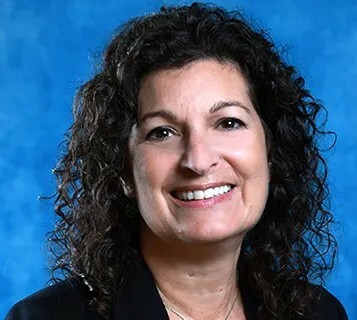 Collier County School Board Chair Stephanie Lucarelli’s presentation at our November
9th luncheon focused on the challenges facing public education and our district in
particular. She began with the good news that Collier County Public Schools (CCPS)
has been named by the Florida Department of Education as an Academically High-
Performing School District, one of only 18 in the state. CCPS also, for the second year
in a row, has the lowest student absentee rate in Florida and its financial management
team has won prestigious awards for accuracy and accountability.
Stephanie continued with a review of enrollment numbers, which are declining due to
low birth rates, decreases in the immigrant population, and migration of students to
home and private schooling. The related decreases in per-student funding, coupled with
flat state funding levels and increasing costs for covering mandated expenses,
transportation fuel, and other basic expenses have strained the CCPS budget.
CCPS anticipates an additional strain on the budget, due to the passage of Amendment
3. Although school taxes are not affected by the change, essential services that are now
being provided by county agencies that will experience losses will be jeopardized. A key
fear is that the County Sheriff’s office, which contributes most of the funding for school
safety officers, will not be able to continue this service when their revenues are cut.
Stephanie discussed problems with teacher funding allocation, which limit salary
increases to classroom teachers narrowly defined, and create inequalities with teachers
working with students in other ways. She mentioned the high cost of health care
insurance and conflict arising from the need to increase co-pays.
Stephanie also talked about issues connected with charter and private schools, focusing
on problems with administrative fees at some charter schools, state action in
overcharging CCPS for vouchers, and poor performance of many students who return
to CCPS after home or private schooling (students who have no test score
accountability in alternative placements)—performance that reflects badly on CCPS
when overall average performance is assessed.
She also highlighted a specific issue where student-specific money is claimed by
charter schools in September, then in October the same students appear on the rolls
for actively attending CCPS—which requires a claw-back that doesn’t happen until the
next June. This leaves the public schools educating students whose funding has been
effectively lent, interest-free, to a charter school for a full school year.